
Grok's connector page offers a list of ready-made integrations alongside a Custom option, and the custom path is the one that matters here: it is where you point Grok at an MCP server it does not already know about. Everything running on your own Mac falls into that category, so a Warplet URL always goes in under Custom rather than any of the named entries.
Grok is also the client where it is easiest to forget a connector exists, since there is no per-chat toggle reminding you. If Grok is not touching your local tools, the usual fix is to name them in the question.
This guide covers grok.com. Grok Bot is a separate surface with its own connector list, and you install a URL there by asking the bot rather than filling in a form. See Connect Warplet to Grok Bot for that flow.
Warplet is a macOS app that connects hosted AI clients to MCP servers running locally on your Mac. If you have not set it up yet, start with How to use Warplet.
Before you start
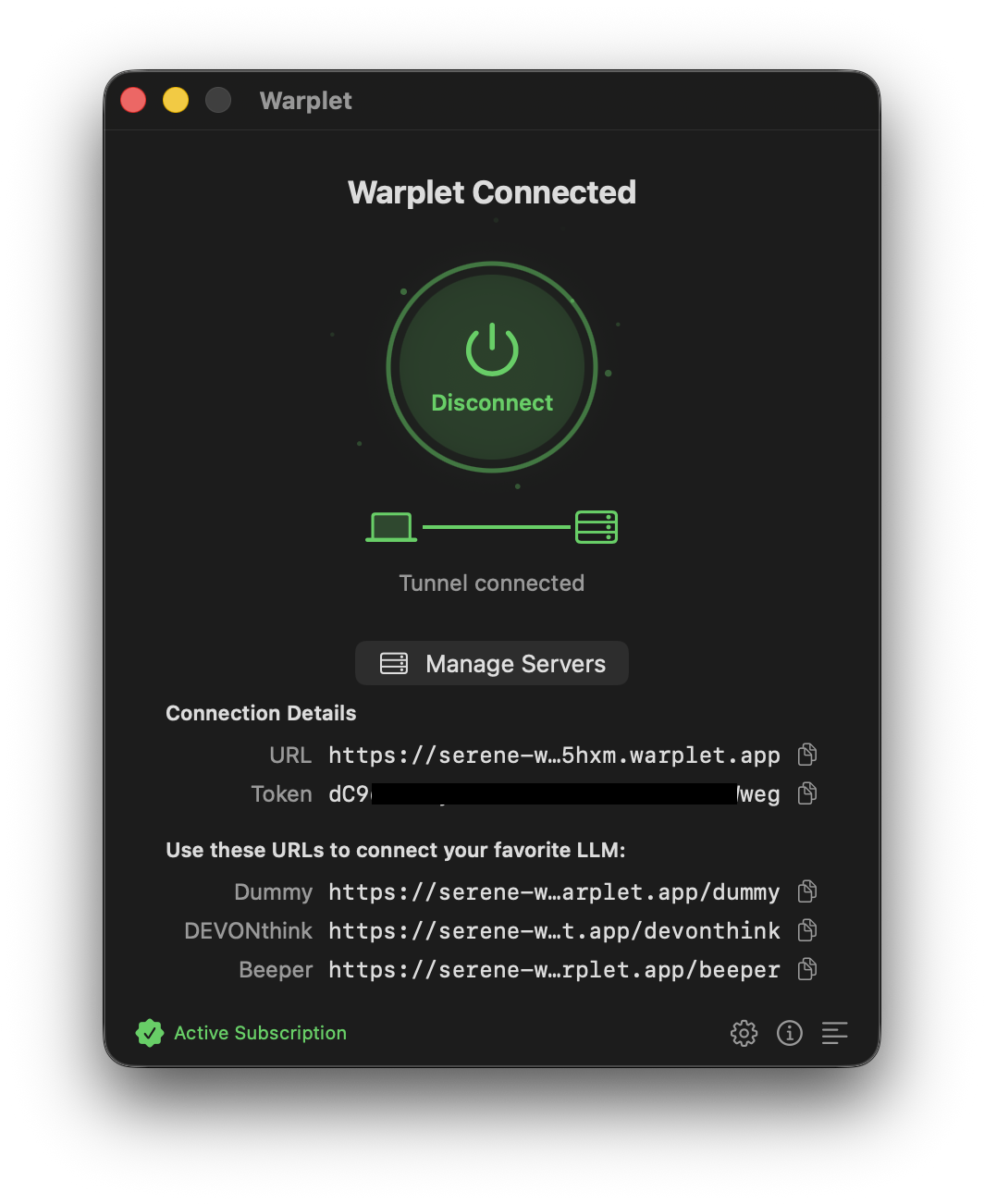
Make sure Warplet is running and connected. The app lists one URL per MCP server under Use these URLs to connect your favorite LLM. Each URL routes to a specific MCP server: the DEVONthink URL routes to the DEVONthink MCP server, the Beeper URL to the Beeper MCP server, and so on. Copy the URL for the server you want to connect.
Add the connector
-
Navigate to your Grok connectors page: https://grok.com/connectors.
-
Click New Connector.
-
Choose Custom.
-
A form will appear. Fill it out with the following details:
- Name:
Warplet(or the name of the app you're exposing) - Server URL: your Warplet MCP URL, copied from the app
- Name:
-
Click Add Connector to save the new connector.
-
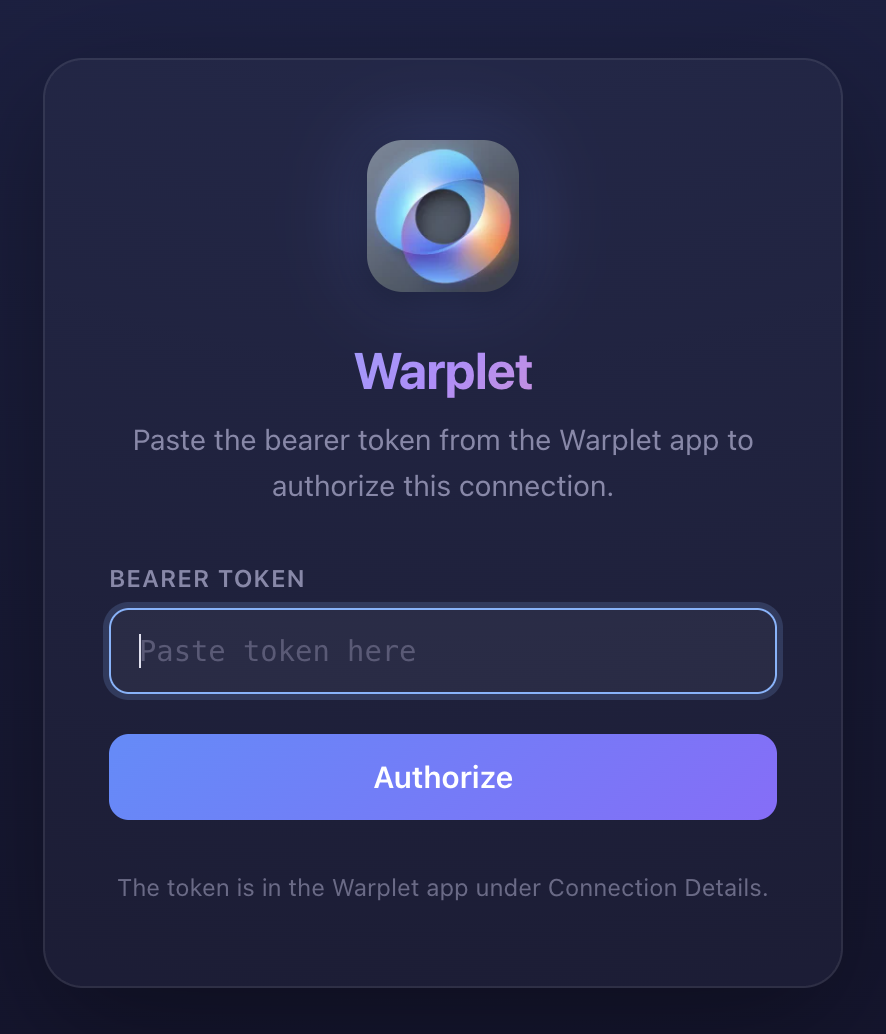
When Grok asks you to authorize the connector, follow the redirect to the Warplet authorization page, paste the bearer token shown in the Warplet app, and approve.
Once connected, you can use your local tools directly within Grok by asking it to use your connector in conversation.
What the authorization step is doing
Grok runs the OAuth 2.1 flow that MCP clients expect against your Warplet tunnel: it reads the discovery metadata, registers itself as a client, and redirects you to a Warplet-hosted page. That page asks for your bearer token, and the token you paste becomes the credential Grok sends on every later request.
The tunnel URL itself is public. The bearer token is the only thing that keeps anyone else from reaching your local servers through it, so do not paste it anywhere but the Warplet authorization page.
Troubleshooting
Adding the connector fails or the URL is rejected. Grok fetches your tunnel while creating the connector, so Warplet needs to be running and connected at that moment. Open the app, confirm it shows as connected, and add it again.
You get a 401 after it was working. The bearer token did not match. Regenerating the token in the Warplet app invalidates connectors that authorized with the old one. Reauthorize and paste the current token.
Grok never uses the connector. Name it, or name the app, in your question: "use my Warplet connector to search DEVONthink for..." is much more reliable than hoping Grok reaches for it on its own.
A tool Grok calls no longer exists. The tool list is cached from when the connector authorized. If you changed which servers Warplet exposes, remove and re-add the connector to force a fresh fetch.
Calls fail even though the connector looks fine. Make sure the local MCP server is running. Warplet forwards to localhost and cannot start the app for you.
Now connect an actual app
The connector above gives Grok a path to your Mac. What it can do once it is there depends on which local MCP server that URL points at:
- Use DEVONthink with any AI client
- Use Obsidian with any AI client
- Use NotePlan with any AI client
- Use Beeper with any AI client
- Use Google Chrome with any AI client
- Use Home Assistant with any AI client
You can add as many connectors as you have servers. Each Warplet URL is added separately.